
Summary
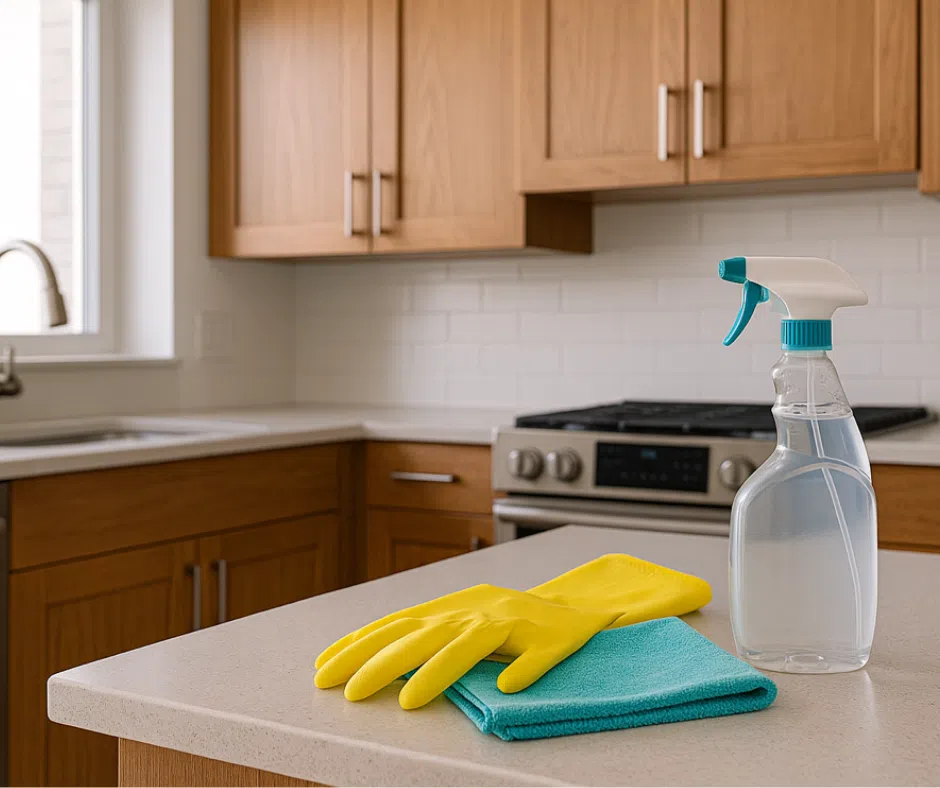
The best way to clean greasy kitchen cabinets is to use a mild cleaning solution made from warm water and washing-up liquid or vinegar. Wipe down cabinet doors and shelves with a clean cloth, scrub areas affected by grease stains, and dry surfaces completely. For stubborn grease and grime, apply a paste using water and bicarbonate of soda. Always follow your cabinet manufacturer’s guidelines before cleaning.
Why Grease and Grime Build Up on Kitchen Cabinets
Over time, kitchen cabinet doors and drawers attract airborne grease, splatters from cooking, and dust. When this residue settles, it forms a sticky film that’s difficult to remove without applying some elbow grease.
Greasy cabinets are common near hobs, ovens, and kettles where steam and oil mix and rise. These particles cling to wood cabinets and painted surfaces, often dulling the finish and causing discolouration. Grime also collects around handles, hinges, and lower edges where hands frequently make contact.
Inside the cabinets, crumbs and food residue contribute to a build-up of mess. If ignored, this accumulation can trap smells, encourage bacteria, and damage delicate surfaces over time. Regular cabinet cleaning helps maintain a hygienic kitchen and preserves the appearance of wood kitchen cabinets and painted finishes.

When to Deep Clean Cabinet Doors and Shelves
Sticky handles, dull or patchy cabinet doors, or visible grease stains are clear signs it’s time to clean greasy cabinets. If you’re regularly frying or baking, cleaning kitchen cabinet doors every few months will help prevent the build-up of grease and grime.
Deep cleans are also ideal before applying new shelf liners or reorganising your kitchen storage.
What You’ll Need for Effective Cabinet Cleaning
-
Warm water
-
Washing-up liquid or white vinegar
-
Bicarbonate of soda
-
Clean cloths or microfibre cloths
-
Soft-bristled brush or toothbrush
-
Spray bottle
-
Dry towel
Optional: a ready-to-use cabinet cleaning product designed for kitchen surfaces
Always test your chosen cleaning solution on a small hidden area, especially for painted or varnished wood cabinets.
How to Clean Greasy Cabinets Step by Step
- Begin by emptying cupboards and drawers. This allows you to clean cabinet interiors, shelf corners, and door frames without obstruction.
- Vacuum or brush away loose crumbs and dust. Use a nozzle attachment to clean along joints and inside corners.
- Mix a solution of warm water with a few drops of washing-up liquid or white vinegar. For extra strength, add a small amount of bicarbonate of soda to help loosen grease stains.
- Spray the cleaning solution onto the surface or apply using a damp cloth. Let it sit for 30 seconds to begin breaking down any oily film.
- Using a clean cloth, scrub the cabinet doors and frames. Apply gentle pressure and a bit of elbow grease, especially around knobs, handles, and greasy areas. For tight spaces and grooves, a toothbrush works well.
- Rinse all surfaces using a fresh cloth dipped in clean water. This step is key to removing any leftover cleaner or residue.
- Dry immediately with a clean towel. Moisture can warp or dull the finish of wood kitchen cabinets and should not be left to air dry.
For Tough Grease and Grime
To clean greasy wood or heavy build-up, make a paste using bicarbonate of soda and warm water. Apply it gently using a cloth or sponge and rub in circular motions. This lifts grease without scratching surfaces.
On older or untreated cabinet doors, take extra care not to soak the surface. Always wipe away moisture and follow with a dry cloth.
Common Mistakes in Cabinet Cleaning
- Using too much water, especially on wood cabinets
- Skipping the rinse step, which can leave dull film
- Scrubbing too hard and damaging finishes
- Leaving greasy residue on cabinet handles
- Using products that aren’t safe for delicate surfaces
Maintain Clean Kitchen Cabinets with These Tips
- Wipe cabinet doors weekly using a damp cloth
- Use your extractor fan when cooking to reduce airborne grease
- Line shelves to prevent spills from staining
- Tackle splashes immediately to avoid long-term marks
- Dust the tops of cabinets monthly if they’re not enclosed
FAQs About How to Clean Cabinet Doors and Remove Grease
What’s the best way to clean greasy cabinets without damaging them?
Use washing-up liquid and warm water or vinegar for everyday cleaning. For tougher areas, apply a mild paste and rinse with clean water.
Can I clean greasy wood cabinets with baking soda?
Yes, but use it sparingly and always test first. Avoid soaking the surface and dry immediately with a clean cloth.
How do I remove grease stains from kitchen cabinet doors?
Let your cleaning mix sit for 30 seconds before scrubbing. For tougher stains, apply a bicarbonate of soda paste and wipe with warm water.
Do I need to clean cabinet interiors as well?
Yes. Food packaging, spills, and crumbs often lead to sticky residues or bad smells. Wipe them out during each deep clean.
What if I have glass inserts or glossy cabinet panels?
Use a vinegar and water mix for glass, and a soft cloth for gloss surfaces. Avoid rough scrubbers to protect the finish.
To keep the whole space fresh, not just one appliance, visit our kitchen cleaning hub.