
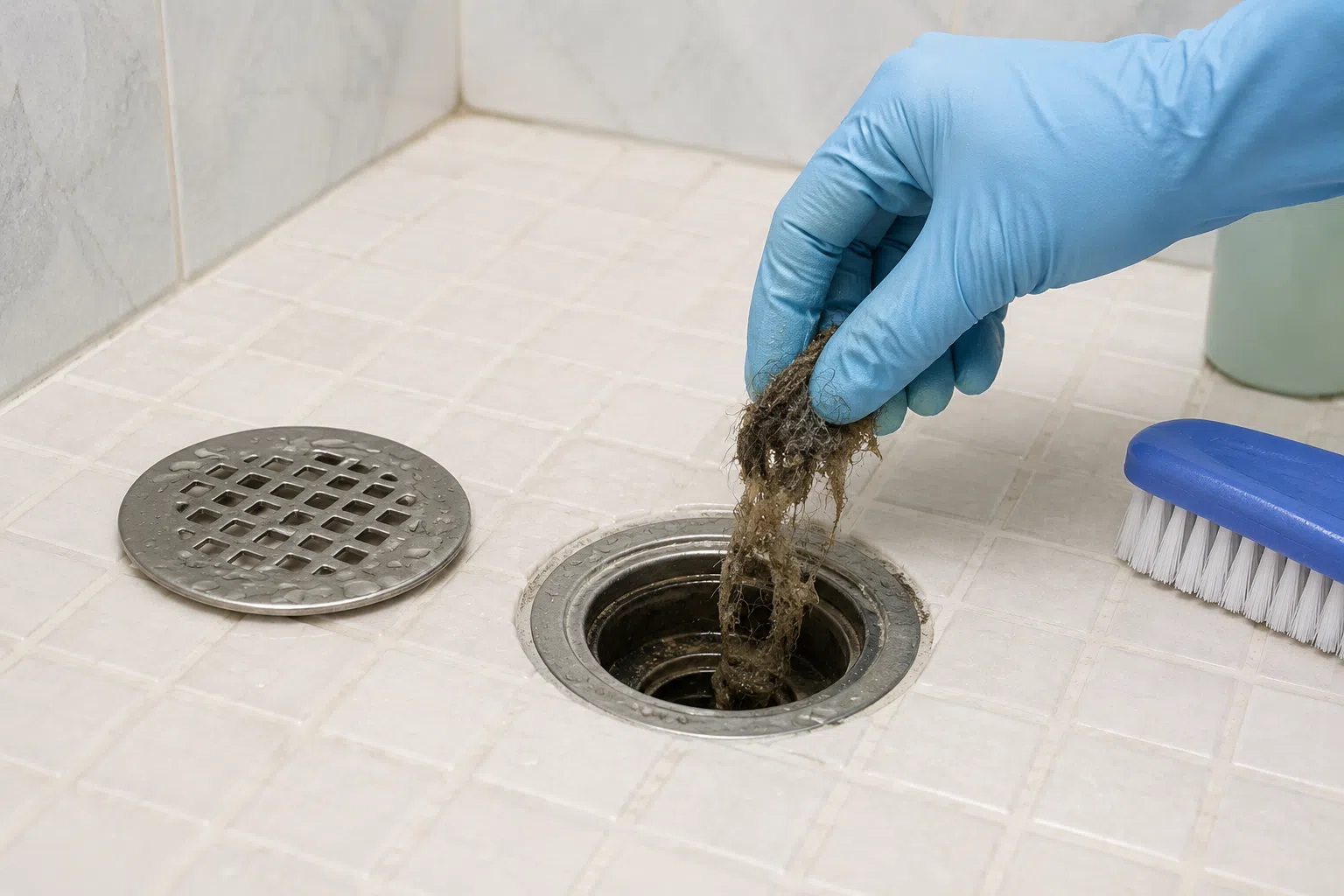
How to Clean a Shower Drain
To clean your shower drain, lift off the cover, pull out any trapped hair with gloved fingers or a drain brush, then pour in 3 tablespoons of baking soda followed by 250ml of white vinegar. Leave it to fizz for 15 minutes, flush with a kettle of hot water, and allow the drain to run clear and odour-free.
A slow clearing shower drain and that faint drain smell almost always come from the same thing: a knot of hair bound together with soap scum and grease sitting just below the drain cover. The good news is you rarely need a plumber or anything harsh to sort it.
What you'll need
- A pair of rubber gloves for cleaning your shower effectively.
- Bicarbonate of soda (about 3 tablespoons)
- White vinegar (around 250ml)
- A kettle of boiling water
- An old toothbrush or a narrow bottle brush
- A flat-head screwdriver (only if your cover is screwed down)
- A drain snake or a straightened wire coat hanger for stubborn clogs
- A torch to see down the pipe
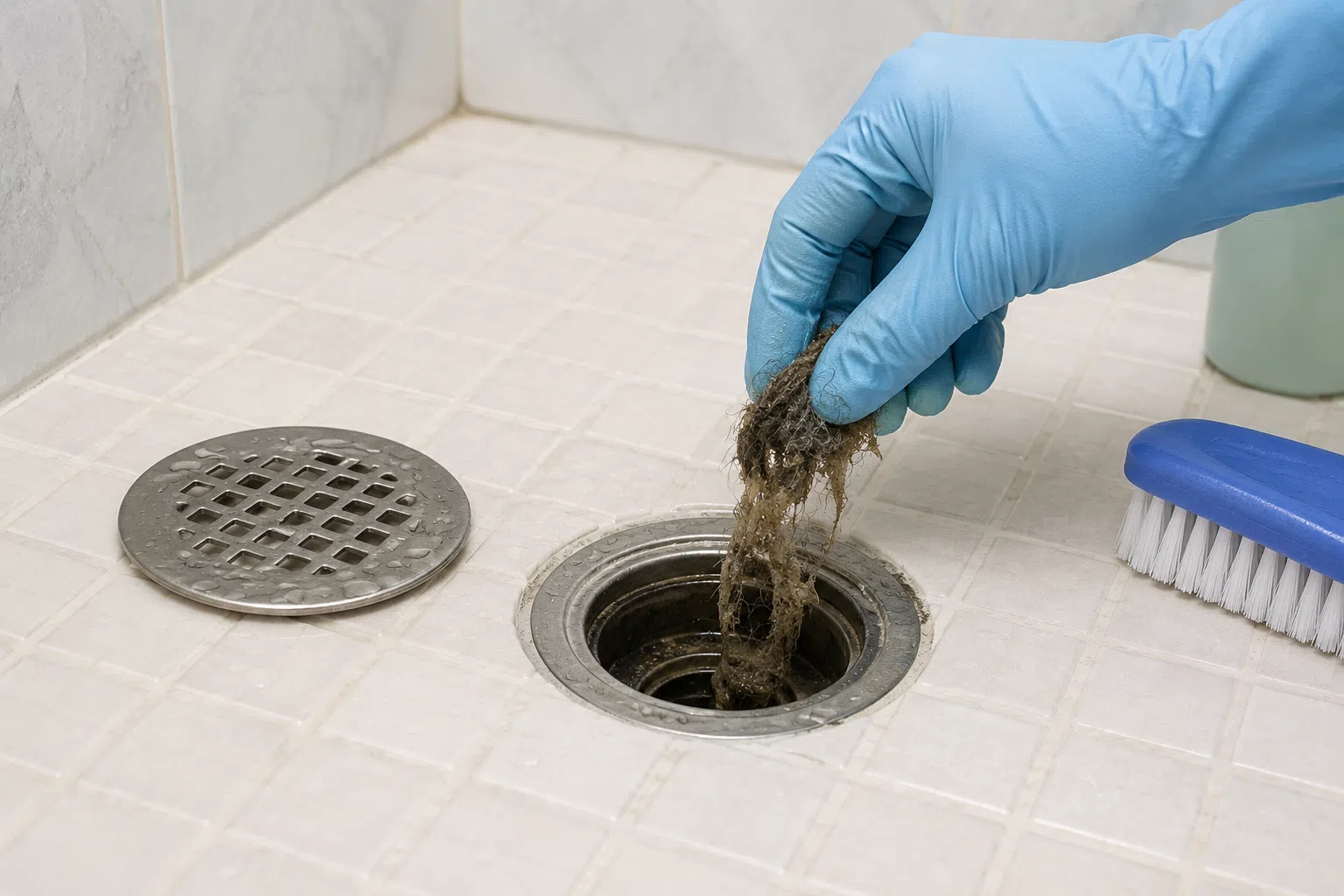
How do you clean a shower drain step by step?
Set aside about 20 minutes. Most of that is waiting while the bicarb and vinegar do their work.
1. Remove the cover or grate. Many UK shower trays have a chrome cover that lifts straight out or twists a quarter turn. If yours is held by a small screw, undo it with a flat-head screwdriver and keep the screw somewhere safe. Older trays may have a square trap cover you prise up with a coin.
2. Pull out the hair. This is the part that does the heavy lifting. Put your gloves on, shine the torch in, and hook out the clump of hair and gunk with your fingers, a bent piece of wire or a plastic drain brush. It will not be pretty, especially if you have left things for a while. Drop it straight in the bin, not back down the drain.
3. Scrub the drain cover and the rim for a thorough clean. While the cover is off, scrub it and the inside of the drain opening with an old toothbrush. Soap scum builds up into a grey, greasy film here, and that film is what holds new hair in place. Rinse the cover under the tap.
4. Pour in the bicarbonate of soda. Tip roughly 3 tablespoons of baking soda straight down the open drain so it settles inside the pipe rather than sitting on the surface for better unclogging.
5. Add the white vinegar. Pour in around 250ml. It will foam up immediately. That fizzing reaction lifts grease and loosens the softer residue clinging to the pipe walls. Leave it to work for 15 minutes.
6. Flush with boiling water. Pour a full kettle of just-boiled water slowly down the drain to wash everything through. If you have a plastic shower tray or know your pipes are plastic, use very hot rather than fully boiling water to be safe.
7. Refit the cover. Replace the grate or cover, run the shower for 20 seconds, and check the water drains away quickly with no gurgle.
How do you unblock a shower drain that's badly clogged?
If water still pools after the bicarb and vinegar, the blockage is deeper than the plughole. Reach for a drain snake, or straighten a wire coat hanger and bend a small hook into one end. Feed it down the drain, twist gently, and draw it back up. You will usually pull out a surprising amount of matted hair on the first go. Repeat until it comes back clean.
A plunger can also help. Smear a little petroleum jelly around the rim for a better seal, run an inch of water in the tray to cover the plunger lip, then pump firmly ten to fifteen times. The suction shifts clogs that brushing alone cannot reach. Avoid shop-bought caustic drain unblockers where you can, especially in older or plastic pipework, as they can damage seals and they are dangerous to handle.
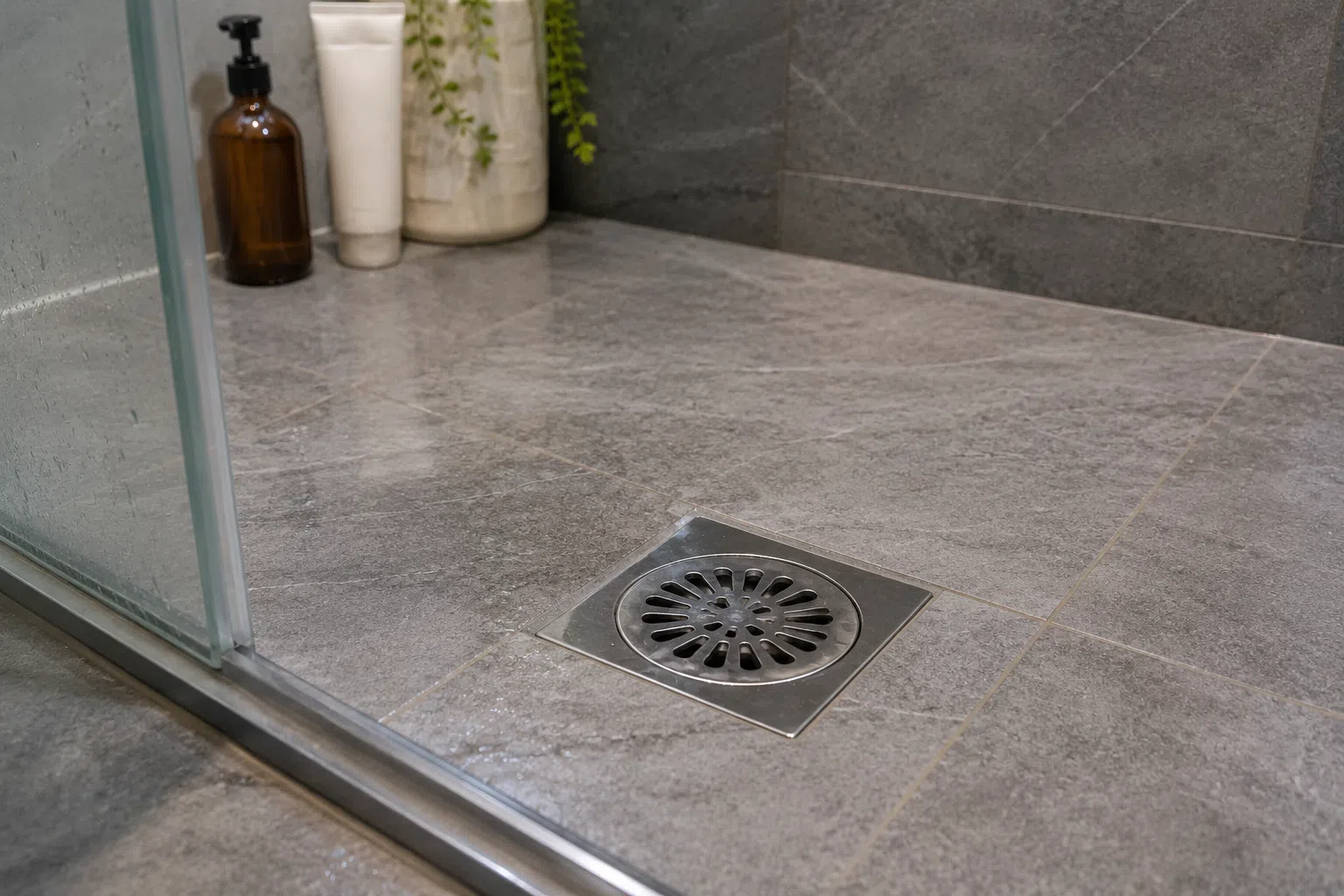
Why does my shower drain smell?
A drain smell is usually one of two things. Most often it is a build-up of decomposing hair, skin cells and soap scum in the trap, which the bicarb and vinegar method clears nicely. Less often it is a dried-out trap that can be fixed by pouring in a cup of baking soda. The U-bend under your shower holds a small plug of water that seals out sewer gases, and if a shower is rarely used that water can evaporate, letting drain smells drift up. Running the shower for thirty seconds refills the trap and the smell disappears.
If a clean drain still smells, pour a kettle of hot water with a tablespoon of baking soda down it once a week to keep the trap fresh.
How often should you clean a shower drain?
Give the drain a quick hair clear-out once a week if anyone in the house has long hair, or once a fortnight otherwise, to maintain proper drainage. Do the full bicarb and vinegar flush once a month to stop grease building up before it becomes a blockage. Two minutes of upkeep a week saves you the unpleasant deep clean later.
Mistakes to avoid
- Never mix bleach with vinegar or other drain cleaners. Combining them can release toxic fumes. Stick to one product at a time and rinse thoroughly between any changes.
- Don't push hair further down. It is tempting to poke a clog through, but you are just moving the problem deeper into the pipe. Always pull hair up and out.
- Don't pour boiling water down a cracked or plastic tray waste without checking it can take the heat. Very hot tap water is the safer choice if you are unsure.
- Don't ignore a slow drain. A drain that is slow today is a fully blocked drain in a fortnight. Clear it while it is easy to prevent needing to call a plumber later.
A hair catcher sitting over the plughole is the single best preventative. Once you have the drain clean, a £3 silicone hair trap saves almost all of this work in future.
Frequently asked questions
Does bicarbonate of soda and vinegar really unblock a shower drain?
Yes, for grease, soap scum and light hair build-up. The fizzing reaction loosens residue on the pipe walls and the hot-water flush carries it away. It will not break through a solid plug of matted hair on its own, which is when you need to physically pull the hair out with a drain snake or hooked wire first.
Can I use bleach to clean a shower drain?
You can pour diluted bleach down to kill odour-causing bacteria, but it does nothing to shift a physical hair clog and it should never be mixed with vinegar or any other cleaner. Clearing the hair by hand and using bicarbonate of soda is safer and more effective for most household drains.
How do I clean a shower drain I can't remove?
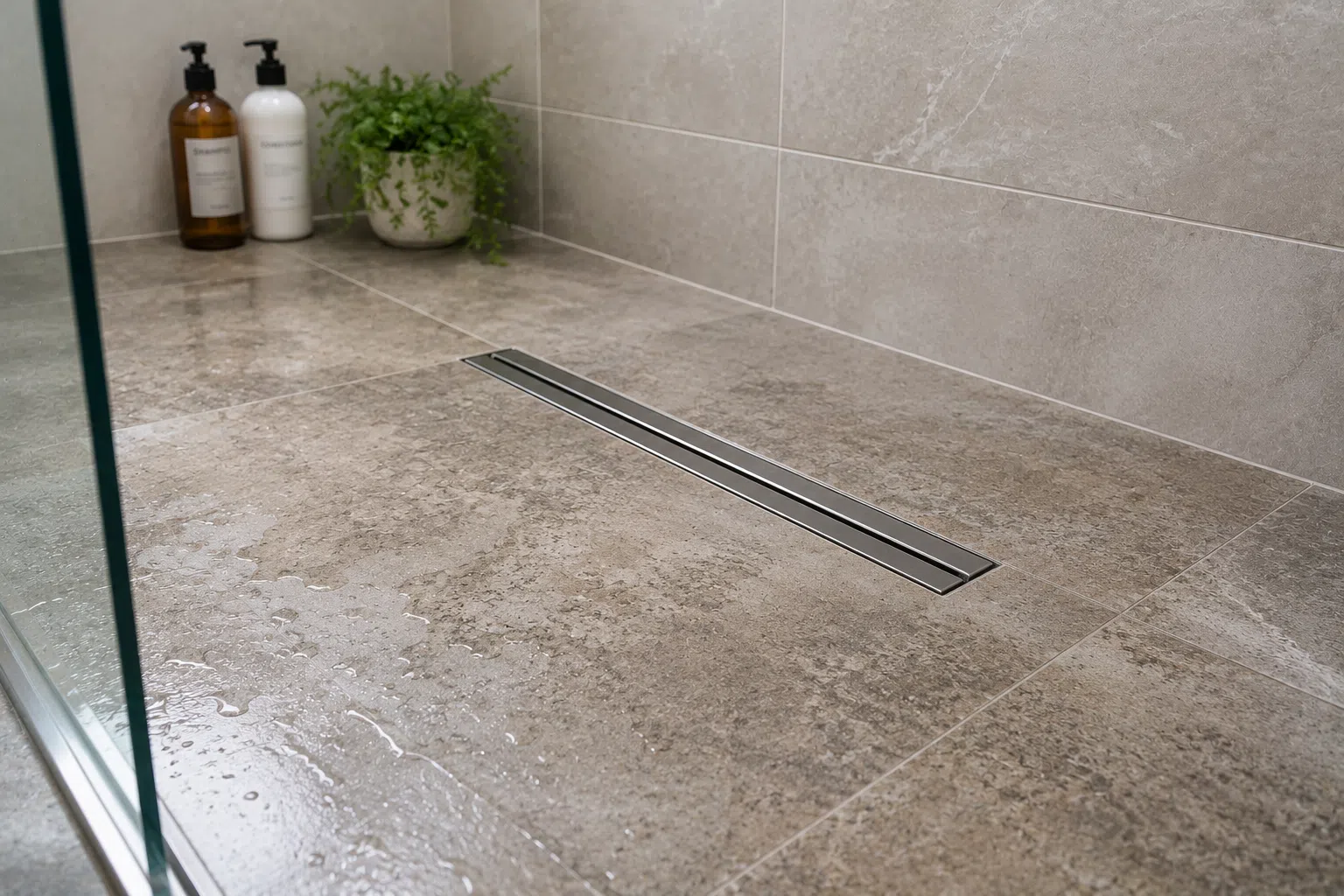
If the cover is fixed or built into the tray, slide a drain brush or a bent wire down through the slots to hook out hair. Then run the bicarb and vinegar flush as normal. A narrow bottle brush is thin enough to fit through most fixed grates.
Why is my shower draining slowly but not fully blocked?
A slow drain is an early-stage clog, usually hair and soap scum narrowing the pipe rather than sealing it. Clear the visible hair, run the bicarb and vinegar method, and it should speed back up. Catch it now and you avoid a full blockage later.
What stops a shower drain getting blocked in the first place?
A silicone or mesh hair catcher over the plughole stops the vast majority of blockages, since hair is the main culprit. Empty it into the bin after each shower, and give the drain a hot-water flush once a week.
Keeping on top of small jobs like this is what keeps a bathroom fresh between deep cleans. If you would rather hand the whole house over to someone else, Diamond Home Support has trusted local cleaners across the UK. Pop in your postcode to find your nearest team and book a regular clean.
Read some of our other "How To Clean" Blog articles:
How to Clean Oven Glass Without Using Harsh Chemicals
How To Get Rid Of Fruit Flies In The Kitchen
Clean Your House Fast: Hacks to Clean Your House Quickly!
Allergen-Free Home Cleaning Tips For Allergy Sufferers
The Best Homemade Glass Cleaners For Streak-Free Windows
How To Get Your Bras White Again
How To Polish A Stainless Steel Sink With Flour
How To Clean Your Barbecue Grills With An Onion
How To Clean Tea Stains From Mugs
How To Remove Pet Hair With Rubber Gloves
How to Stop Your Washing Machine From Smelling
Find out about Diamond Home Support's comprehensive cleaning services or home help services.