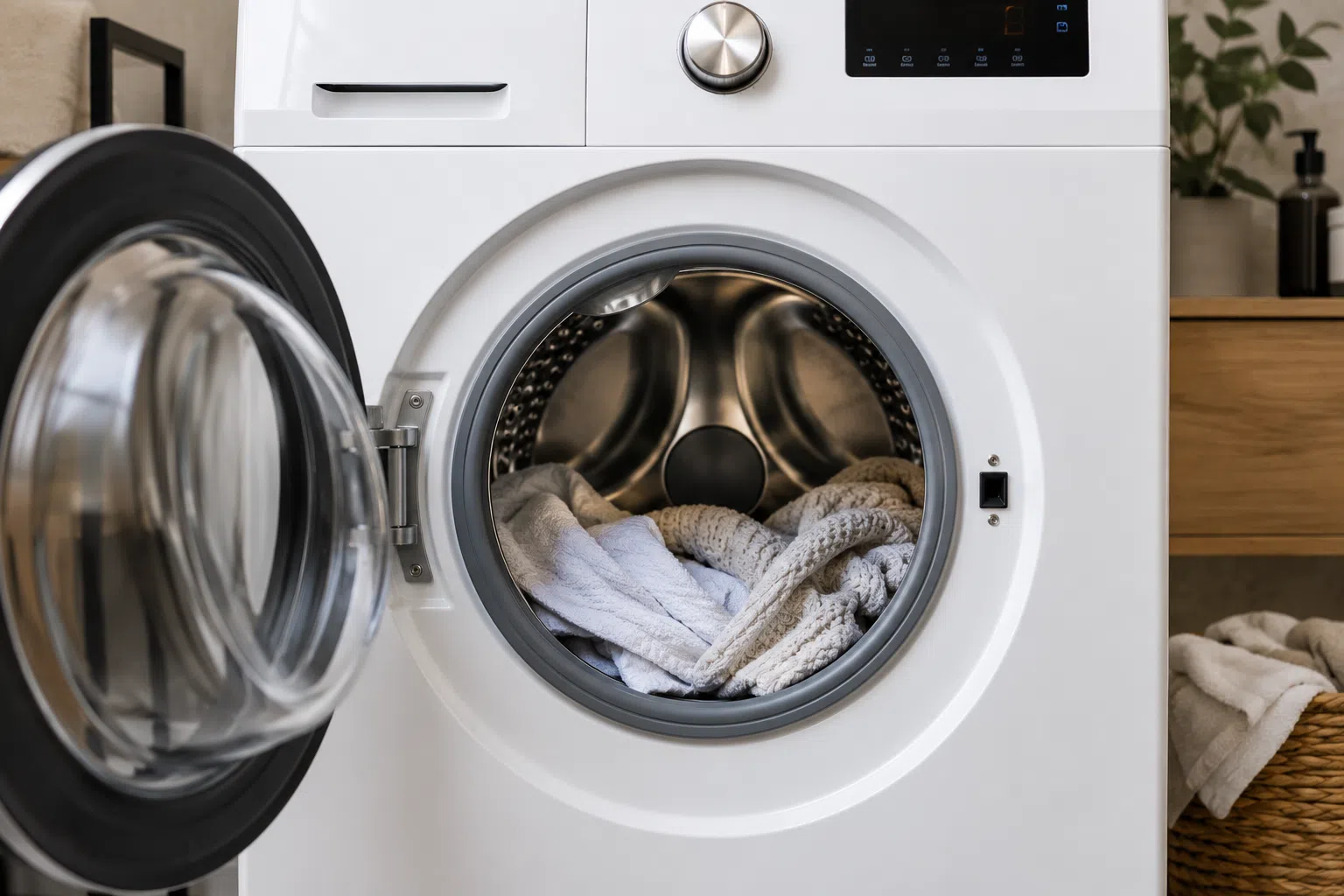
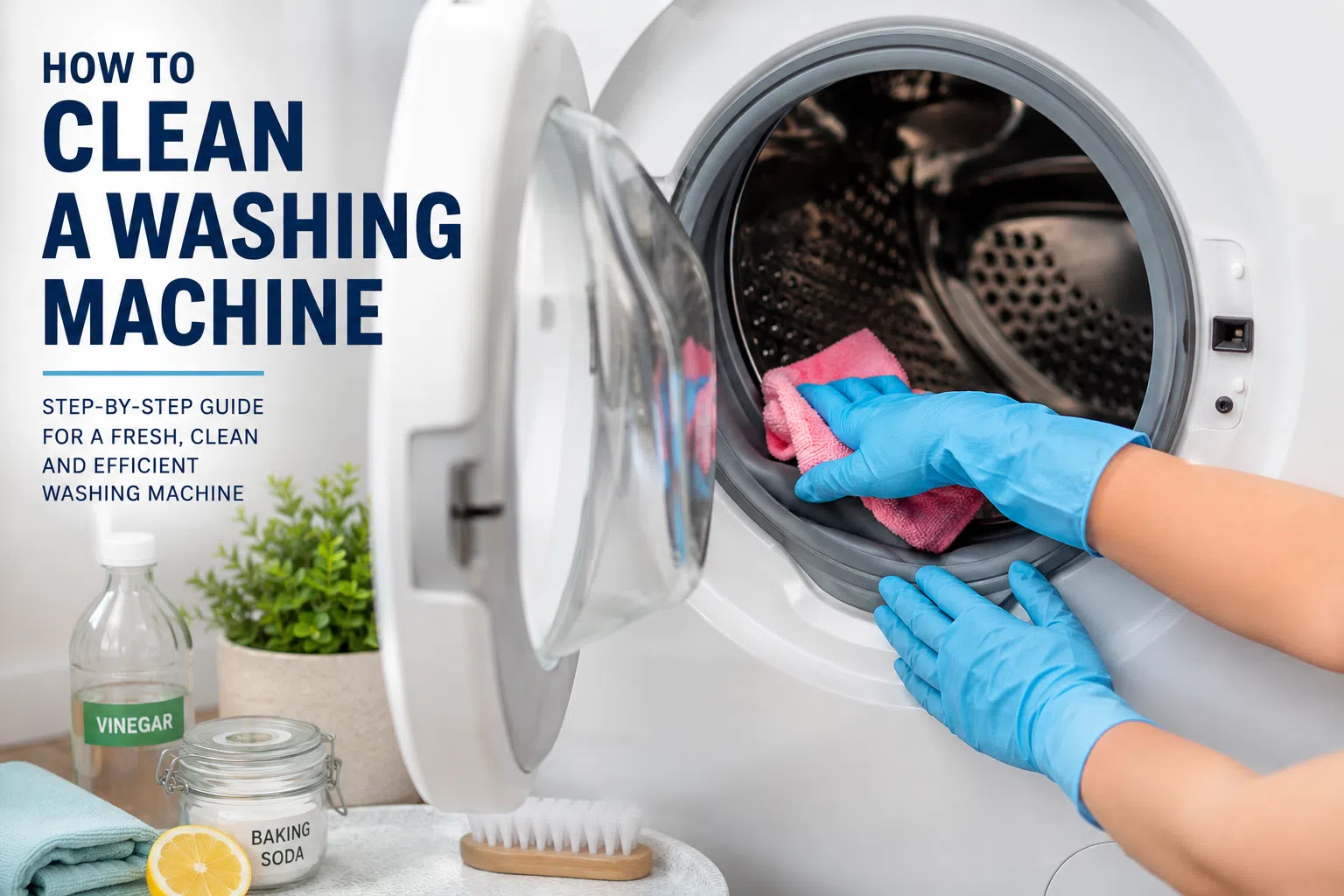
To clean a washing machine, run an empty wash on the hottest cycle with 250ml of white vinegar in the drum, then scrub the detergent drawer and wipe the rubber door seal. Finish by clearing the filter and leaving the door open to dry. The whole job takes under an hour and costs almost nothing.
If your freshly washed laundry still smells a bit off, the machine itself is nearly always the culprit. Detergent and fabric softener leave a residue that, combined with damp and the low temperatures most of us wash at, gives mould and bacteria somewhere to grow. The fix is straightforward, and you can keep it that way with about ten minutes a month.
What you'll need
- White vinegar (around 250ml)
- Bicarbonate of soda
- A microfibre cloth
- An old toothbrush
- Washing-up liquid
How do you clean a washing machine with vinegar?
Pour roughly 250ml of white vinegar straight into the empty drum, not the drawer, and set the machine to its hottest, longest cycle. On most machines that's the 90°C cottons wash. The heat loosens greasy detergent build-up while the vinegar tackles limescale, which matters a lot if you live somewhere with hard water like the South East. If the machine still smells musty afterwards, add two tablespoons of bicarbonate of soda to the drum and run a second hot cycle.
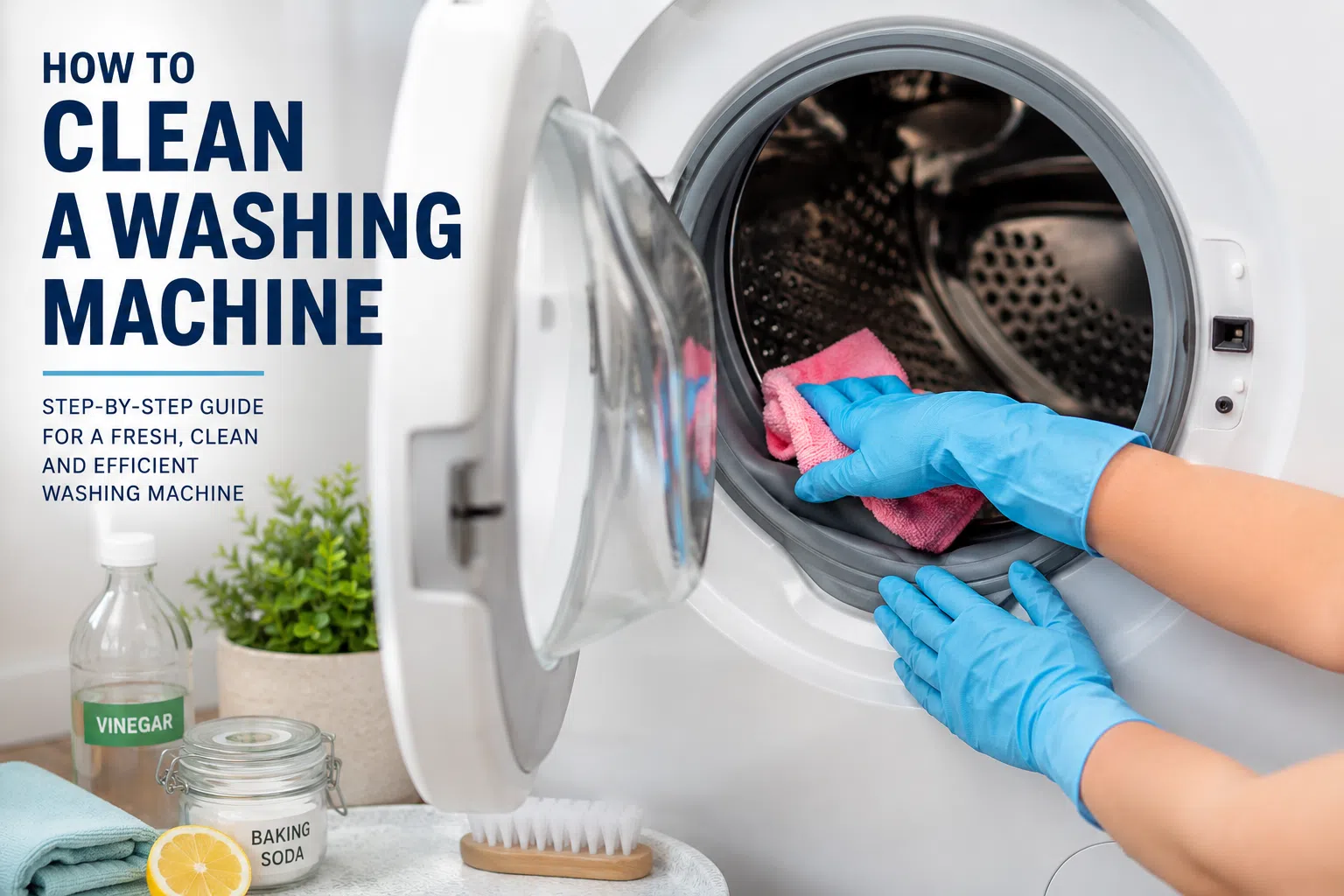
Cleaning the parts that actually hold the grime
1. The detergent drawer
Press the small tab in the centre of the drawer and slide it right out. Most people never do this, which is why it's usually coated in slimy black mould. Soak it in warm soapy water for ten minutes, then work into the corners with the toothbrush. Give the empty recess a wipe too, as gunk collects on the roof of it where you can't see.
2. The rubber door seal
On a front-loader, the rubber gasket around the door is the worst offender. Peel it back gently and wipe inside with a cloth dipped in a 50/50 mix of vinegar and water. You'll often find trapped coins, hair grips and the odd missing sock in there as well.
3. The filter
There's usually a small hatch at the bottom front. Put down a towel and a shallow tray first, because water will drain out when you open it. Unscrew the filter, pull out the lint and debris, rinse it and pop it back. A blocked filter is a common reason a machine won't drain properly, so it's worth doing every couple of months.
I've made the mistake of leaving this too long many times. If you leave it too long it is a much harder job. Do it regularly and it's a quick 2 minute job.
Why does my washing machine smell even after cleaning?
If the smell keeps coming back, it's almost always trapped moisture. Leaving the door and drawer shut between washes seals damp inside, which is exactly what mould wants. Leave both open to air, wipe the seal dry after a wash, and run a hot maintenance cycle monthly. Washing everything at 30°C is kinder to your bills and your clothes, but it doesn't get hot enough to keep the machine itself hygienic. The occasional hot wash bridges that gap.
How often should you clean it?
A hot maintenance wash once a month, plus a quick wipe of the seal and drawer every couple of weeks, keeps a machine fresh indefinitely. Clear the filter every two to three months.
Mistakes to avoid
- Never mix vinegar with bleach, or bleach with other cleaners, because the fumes are genuinely dangerous.
- Don't skip the filter; it's the part most likely to cause an actual fault.
- Don't shut the door straight after a wash. Airflow is what stops the smell returning.
Frequently asked questions
Can I use bleach instead of vinegar?
You can run a hot wash with a cup of bleach to disinfect, but never combine it with vinegar or any other product. Vinegar is gentler on seals and pipes for routine cleaning, so most people stick with it.
Where is the filter on a washing machine?
On front-loaders it's behind a small flap at the bottom front of the machine. Top-loaders often don't have an accessible one - check your manual.
Does a washing machine clean itself on a hot wash?
A hot empty cycle helps a lot, but it won't reach the drawer, seal or filter, which is where most of the smell lives. You still need to clean those by hand.
How do I stop mould on the door seal?
Wipe it dry after washing, leave the door ajar between loads, and avoid overdosing on fabric softener, which leaves a sticky film mould feeds on.
Keeping a washing machine fresh is a small job, but staying on top of every corner of the home is harder when life is busy. If you'd rather hand the cleaning over, Diamond Home Support's friendly local cleaners can look after your whole home, regularly or as a one-off. Pop in your postcode to find your nearest office - https://diamondhomesupport.com/ and get a little of your weekend back.