
Introduction
Cleaning your metal mesh grease filter is essential for maintaining air quality in your kitchen and keeping your extractor hood running efficiently. Over time, these filters collect oil vapour and cooking residue, which can cause grease build-up, reduce performance, and even pose a fire risk.
In this guide, you’ll learn how to clean a metal mesh cooker hood filter step by step, using simple household ingredients. By following these methods, you’ll keep your kitchen hood in top shape and your cooking environment fresher and safer.
Key Takeaways
-
Clean your metal mesh grease filter every 2–4 months to avoid grease build-up and ensure your extractor hood performs efficiently.
-
Use hot water, washing up liquid, and baking soda as an effective filter cleaner.
-
Soak, scrub, rinse, and dry your filter thoroughly before reinstalling.
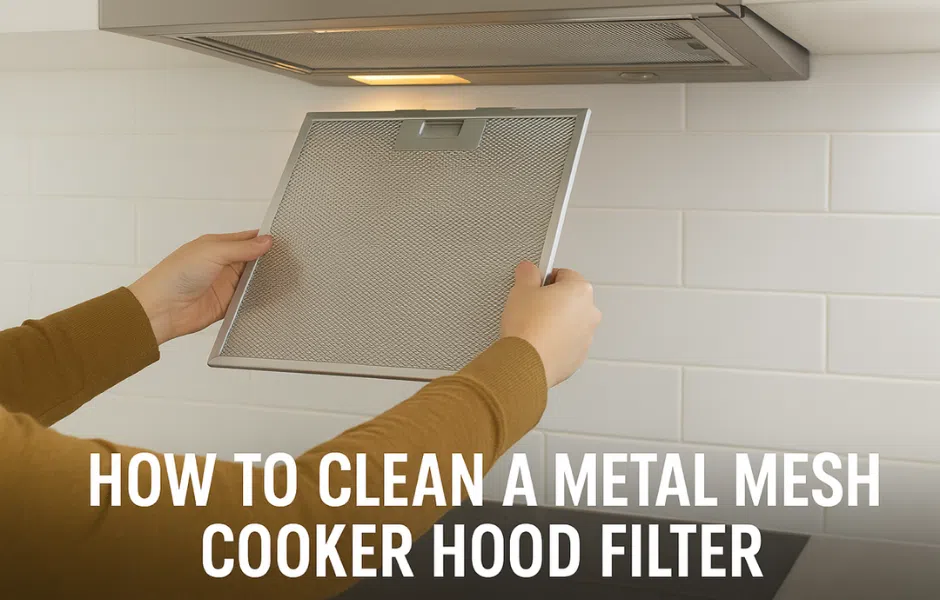
Why You Need to Clean a Metal Mesh Cooker Hood Filter
Your kitchen extractor fan uses a metal mesh grease filter to trap grease particles and cooking fumes. These filters play a key role in preventing odours and sticky surfaces by capturing airborne oils rising from your hob.
Mesh filters are typically made of aluminium or stainless steel, both of which are durable and easy to clean — provided you stay on top of regular maintenance. If neglected, grease over time can clog the mesh, reducing suction and airflow.
There are other filter types too, such as carbon or charcoal filters, but metal mesh versions are common due to their reusability and effectiveness in handling grease.
Tools and Materials You’ll Need
Before you begin, gather the following:
-
Hot water
-
Washing up liquid
-
Baking soda
-
White vinegar
-
A soft-bristled toothbrush or sponge
-
Microfibre cloth or tea towel
-
Optional: dishwasher (if the filter is labelled dishwasher-safe)
These household items make for an affordable, non-toxic filter cleaner that’s gentle but effective — perfect for cleaning areas around food prep.
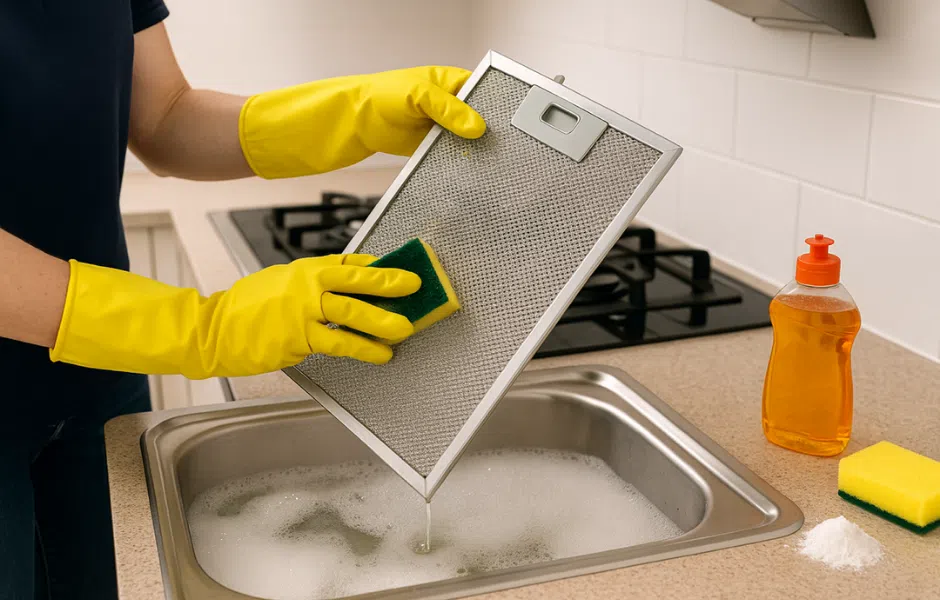
Step 1: Prepare and Remove the Filter
First things first — make sure the kitchen hood is switched off and has cooled completely. Then, remove the filter carefully by pressing or sliding the latch mechanism. Most mesh filters are straightforward to detach, but always refer to your manual if unsure.
Check the filter for built-up grease or signs of wear. If you notice any corrosion or tears in the mesh, a replacement might be due.
Step 2: Make a Cleaning Solution
To create a reliable filter cleaner, fill a sink or basin with hot water. Add a generous squirt of washing up liquid and stir in 2–3 tablespoons of baking soda. For stubborn grease build, pour in a small amount of white vinegar as well.
This combination creates an effective degreasing solution and is often considered the best way to clean cooker hood filters naturally.
Step 3: Soak the Filter
Fully submerge the grease filter in the solution, making sure it’s completely covered. Let it soak for at least 15–20 minutes. If your filter is especially dirty, extend the soak time or sprinkle extra baking soda directly onto the mesh.
The hot water and detergent will begin loosening the grease over time, breaking down residue stuck in the fine mesh.
Step 4: Scrub with a Sponge or Brush
Once soaking is complete, use a sponge or soft brush to gently scrub the filter. Focus on the corners and along the edges where oil and dirt often accumulate.
For finer mesh or intricate sections, an old toothbrush works well. Avoid scouring pads or anything abrasive, particularly on stainless steel, as it may damage the surface.
The goal here is to remove every trace of grime without harming the integrity of the filter.
Step 5: Rinse and Dry the Filter
Rinse the filter under hot running water until all soap and residue are gone. A good rinse ensures no cleaning agents remain trapped in the mesh.
Shake off excess water and pat the filter dry using a microfibre cloth or tea towel. Leave it in a well-ventilated space to air dry fully. Moisture can affect the performance of your kitchen extractor fan, so make sure it’s bone dry before reinstalling.
Step 6: Reinstall and Finish Up
Once dry, slot the grease filter back into the extractor hood, making sure it’s firmly and correctly in place. Listen for a click or check the alignment to ensure it’s secure.
Take a moment to wipe down the inside and outside of the kitchen hood, especially the area around the hob, where grease often settles. This quick extra step keeps everything fresh and tidy.

Maintaining Your Extractor Hood
Keeping your extractor hood in good condition is about consistency. Clean the grease filter every 2–4 months, or more frequently if you cook often. Wipe the kitchen hood exterior weekly and clean your extractor fan blades every six months to prevent motor strain.
If your model includes a carbon filter, follow the manufacturer's advice on when to replace it. Regular cleaning reduces energy consumption, prevents unpleasant smells, and ensures your kitchen remains a safe space to cook.
Summary
Knowing how to clean a metal mesh cooker hood filter properly makes a big difference in the performance and hygiene of your kitchen. With a bit of effort and a few common cleaning ingredients, you can keep your extractor hood running efficiently and reduce build-up before it becomes a problem.
Make it part of your regular routine, and you’ll enjoy a fresher, safer cooking environment every time you switch on the hob.
We cover more ways to tackle grease and residue in our complete kitchen cleaning guide.
Take a look at some of our other blog articles:
How to Clean a Glass Shower Door Without Leaving Streaks
Should You Clean Before a Cleaner Comes?
How To Reduce Allergens In Your Bedroom
6 Reasons Why You Should Use Distilled Water When Cleaning
5 Tips For Cleaning Your Outdoor Furniture
3 Techniques For Cleaning Bathroom Tiles
How To Clean Windows Effectively
Find out about professional house cleaning services in your area and get the time back in your life! In some areas we can also offer home help services.