
How to use lemons to clean your microwave: slice a lemon, heat it in water until steaming, leave the door closed for a few minutes, then wipe away the loosened food and grease. The steam softens dried splashes and the natural citric acid helps lift residue and freshen the interior. It’s quick, low effort and doesn’t leave chemical smells behind.
Most people only clean their microwave when it starts to look bad. By that point, food has baked onto the ceiling and sides, and wiping it cold feels like hard work. The lemon method works because it does the hard part first. It softens everything before you touch it.
What You Need
-
1 fresh lemon
-
A microwave-safe bowl
-
Water
-
A microfibre cloth or soft sponge
-
Oven gloves or a tea towel
That’s it. No specialist cleaners.
Step-by-Step: How to Use Lemons to Clean Your Microwave
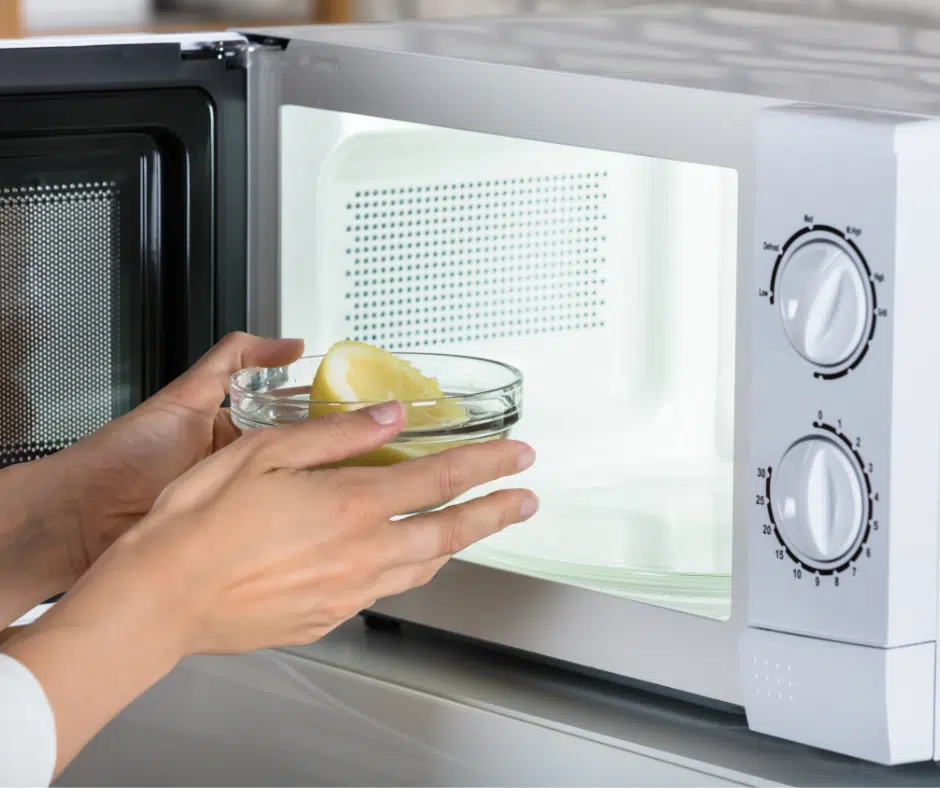
1. Prepare the lemon
Cut the lemon in half. Squeeze the juice into a bowl and drop the squeezed halves in as well. The peel contains oils that help with grease and smell.
Add about 250ml of water. You want enough to create steam without boiling dry.
2. Heat until steaming
Place the bowl in the microwave and heat on high for around 2 to 3 minutes. The exact time depends on your microwave’s power. You’re looking for visible steam and a fogged-up window.
If it’s not steaming properly, give it another 30 to 60 seconds.
3. Keep the door closed
This is the part most people rush. Once the timer finishes, leave the door shut for 5 minutes. The trapped steam continues to soften dried food and grease.
Think of it as letting the moisture do the scrubbing for you.
4. Wipe down the interior
Carefully remove the bowl. It will be hot.
Dip your cloth into the warm lemon water, wring it out, and wipe the ceiling first. That’s where splatters usually bake on. Then move to the sides, back and door.
In most cases, the residue should come away easily with light pressure.
For Stubborn Build-Up
If something still sticks:
-
Hold a warm damp cloth against the patch for 20 to 30 seconds
-
Repeat a shorter steam cycle
-
Avoid abrasive pads. They can scratch interior coatings
Heavy grease above the turntable sometimes needs a second round. Two gentle treatments are better than one aggressive scrub.
Clean the Turntable Properly
Remove the glass turntable and wash it in warm soapy water. Dry it fully before putting it back.
Wipe the rotating ring underneath. Crumbs often hide there and cause smells.
Why Lemons Work
There are two key reasons this method works:
-
Steam loosens dried food and grease.
-
Citric acid in lemon helps cut through light residue and leaves a fresh scent.
The lemon isn’t doing all the work. The steam is. The lemon simply boosts the effect and removes stale odours.
Common Mistakes
-
Wiping before steaming
-
Not leaving the door closed after heating
-
Using too little water
-
Forgetting the ceiling
If you skip the steaming stage, cleaning becomes harder than it needs to be.
How Often Should You Do It?
For most households, once every 1 to 2 weeks keeps things under control.
If you microwave sauces, soups or anything that splatters, weekly cleaning prevents build-up. A quick wipe the same day as a spill makes the next deep clean far easier.
Extra Tips to Keep It Cleaner for Longer
-
Cover food with a plate or microwave cover
-
Wipe obvious splashes while still warm
-
Leave the door open for a few minutes after use to reduce moisture
Small habits prevent that crusted-on mess that makes cleaning feel overwhelming.
Does This Remove Smells?
Usually yes. Microwave odours come from trapped residue. When you soften and remove that residue, the smell goes with it. The lemon scent fades naturally once dry, leaving a neutral interior.
If smells persist, check underneath the turntable and around the door seal. Those areas are often missed.
Final Safety Note
Always use a microwave-safe bowl and handle hot liquid carefully. Avoid letting water run into vents or control panels. Test gently if your microwave has a delicate interior coating, and follow the manufacturer’s care instructions before using any cleaning method.
Once you have the microwave clean take a look at our guide to cleaning your oven.
For broader advice on cleaning kitchen appliances, see our full kitchen cleaning advice section.