
Quick Answer: Cleaning Your Burnt Iron
If you need to know how to clean a burnt iron, the safest approach is to let it cool completely, identify the soleplate type, and use a gentle cleaning method such as baking soda or white vinegar. Avoid abrasive tools, work carefully around steam vents, and always test on a small area first. With the right method, most scorch marks and melted residue can be removed without damaging the surface.
Why Irons Get Burn Marks
Burn marks usually happen when fabric is exposed to too much heat. Synthetic fibres melt quickly and can stick to the soleplate. Starch build-up can also scorch over time, leaving a sticky brown residue. In some homes, hard water contributes to mineral deposits that discolour and trap dirt on the base of the iron.
Understanding the cause helps you choose the safest way to clean a burnt iron without making the problem worse.
Check Your Soleplate Type First
Before using any cleaning method, check what your iron’s soleplate is made from. Most modern irons are:
- Stainless steel
- Ceramic coated
- Non-stick coated
Stainless steel is generally the most forgiving. Ceramic and non-stick coatings require more care because harsh scrubbing can scratch or strip the finish. If you are unsure, check the manufacturer’s guidance.
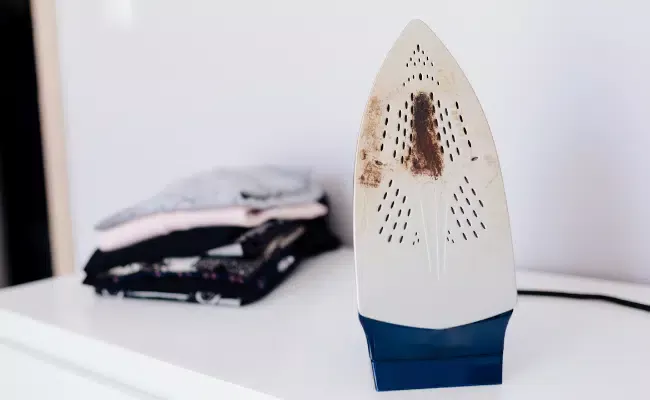
How to Clean a Burnt Iron with Baking Soda
For light to moderate scorch marks, baking soda is often effective.
- Unplug the iron and allow it to cool completely.
- Mix two tablespoons of baking soda with a small amount of water to form a thick paste.
- Spread the paste gently over the soleplate, avoiding electrical areas.
- Use a soft cloth to rub in small circular motions.
- Wipe away residue with a damp cloth and dry thoroughly.
- If steam holes are blocked, use a cotton bud to clean them carefully. This method works well for removing burnt residue on an iron without scratching the surface.
Using White Vinegar for Stubborn Marks
White vinegar can help dissolve tougher build-up.
- Dampen a soft cloth with white vinegar.
- Gently wipe the soleplate.
- For heavier marks, warm the iron slightly, then unplug it before wiping.
- Never pour vinegar directly into electrical components. After cleaning, wipe again with clean water and dry fully before reheating.
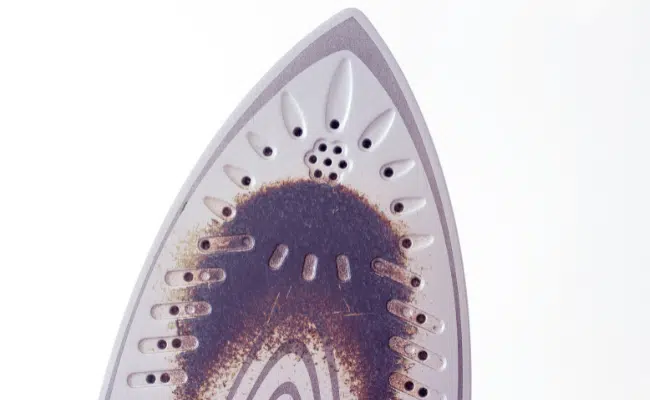
How to Clean a Burnt Iron Soleplate with Melted Fabric
Melted plastic or synthetic fibres need a slightly different approach.
- Allow the iron to cool fully.
- Place it in the freezer for 20 to 30 minutes.
- Once the plastic hardens, gently lift it away using a wooden spatula or similar non-metal tool.
- After removing the residue, wipe with baking soda paste to remove any remaining scorch marks.
Cleaning Steam Vents Safely
Steam vents can trap burnt fabric or mineral residue.
- Use cotton buds dipped in distilled water or vinegar to clean inside the holes.
- Fill the reservoir with distilled water only.
- Run a steam cycle over an old towel to flush out loosened debris.
- This step prevents future scorching caused by blocked vents.
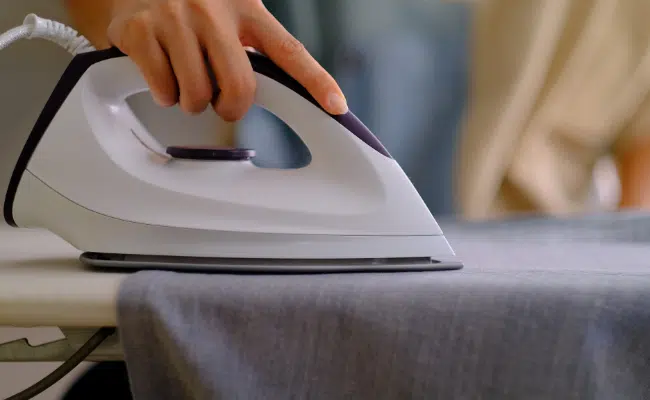
What Not to Use on a Burnt Iron
Avoid anything that can scratch or damage the soleplate.
Do not use steel wool.
Do not use sharp knives or metal scrapers.
Do not use bleach or harsh chemical cleaners.
Do not use dishwasher tablets.
Scratches create rough patches that attract more residue later.
How to Prevent Burn Marks in Future
Once you have managed to clean a burnt iron, prevention is simple.
Check fabric labels before ironing.
Use the correct heat setting for synthetic materials.
Avoid ironing directly over printed designs.
Wipe the soleplate occasionally to prevent build-up.
Use distilled water in hard water areas if recommended.
Regular light cleaning is easier than removing heavy scorch marks later.
When to Replace an Iron
If the soleplate coating is peeling, deeply scratched or rusting, cleaning may not restore performance. Persistent burning smells or inconsistent heating can also indicate internal damage. In those cases, replacement is often safer than repeated repairs.

Frequently Asked Questions
Can I use toothpaste to clean a burnt iron?
Toothpaste is mildly abrasive and may help on stainless steel, but it can scratch coated soleplates. Baking soda is usually safer.
How do I remove burnt fabric from an iron quickly?
Cooling the iron fully and gently lifting hardened plastic with a wooden tool is the safest method before polishing the area.
Is baking soda safe for ceramic soleplates?
Yes, when used gently with a soft cloth. Avoid heavy pressure.
Always follow the manufacturer’s care instructions for your appliance. Test any cleaning method on a small area first and ensure the iron is unplugged and cool before starting. If you are unsure about fabric care or ironing damage, professional cleaning advice may help prevent costly mistakes.
If you want some other tups and tricks for keeping things clean around the home why not take a look at the following articles:
How to Polish a Stainless Steel Sink With Flour
There are many more like this in our cleaning blog.
If you are looking for some help around the home why not try our local cleaning service, our home help service, or our gardening service.
You can find more appliance-specific help in our kitchen cleaning advice section.