
How to Clean A Burnt Pan
A burnt pan is a common kitchen problem, but cleaning a burnt pan correctly depends on the type of cookware you are using. The best way to clean burnt pans is not always the strongest method. It is about choosing the right approach so burnt food lifts away without damaging the pan itself. Different materials react very differently to heat, vinegar, baking soda, or scrubbing, so using the wrong method can turn a scorched pan into a ruined one.
This guide explains tried and tested ways to clean a burnt pan safely, whether you are dealing with a saucepan or frying pan, burnt stainless steel, non-stick cookware, or cast iron.
Quick Summary
When food sticks to the pan and burns, always start gently. Let the pan cool, loosen the burnt-on residue with warm water, then choose a method suited to the pan material. Using the wrong technique is the fastest way to damage pots and pans, even if the stain looks stubborn.
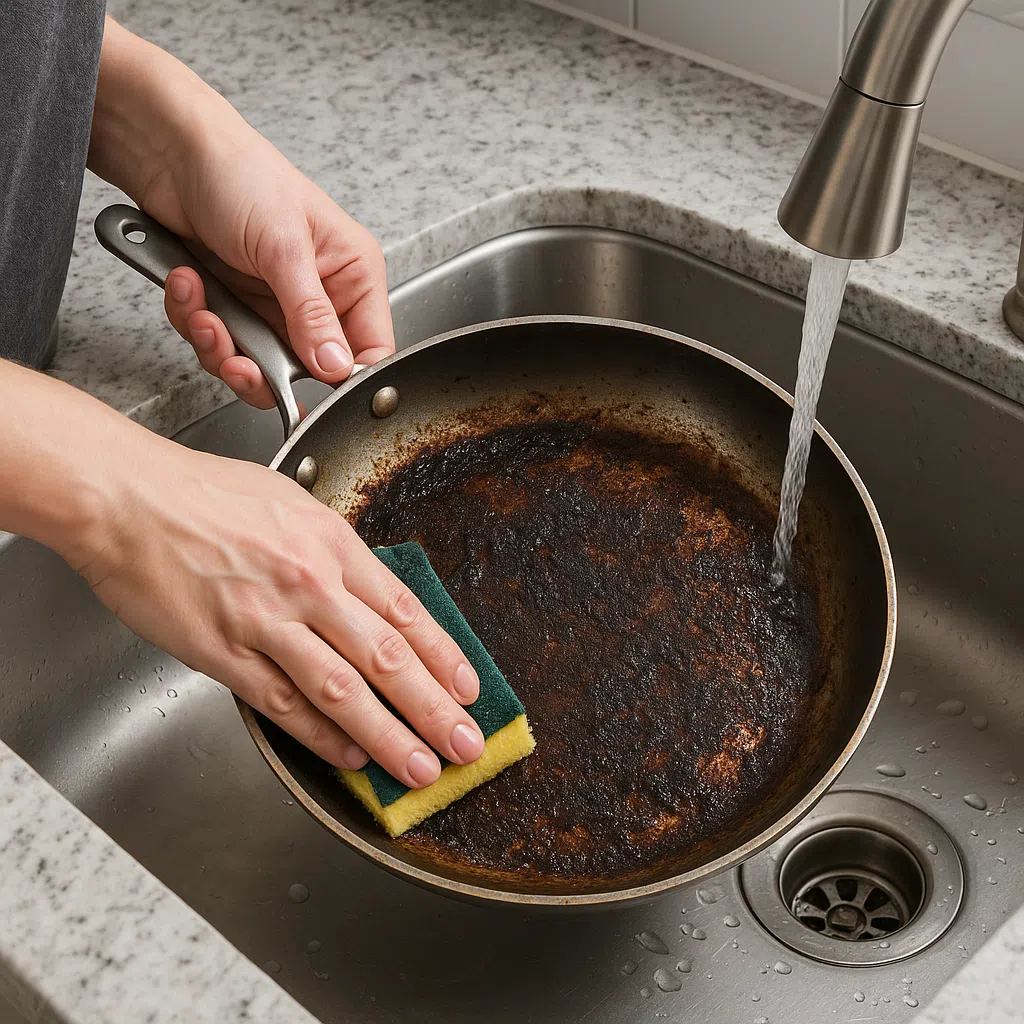
Step 1. Identify the Type of Pan
Before you start cleaning a burnt area, identify the pan no matter how obvious it seems:
-
Non-stick cookware
-
Stainless steel cookware
-
Cast iron or carbon steel
-
Enamel-coated cookware
If you are unsure, treat it as non-stick. This avoids scratching the bottom of the pan or stripping protective coatings.
How to Clean a Burnt Non-Stick Pan
A non-stick pan is the easiest to damage. Once the surface is scratched or overheated, it cannot be repaired, even if the pan looks fine at first.
Safe Method
-
Let the pan cool fully
-
Add warm water and soapy water to cover the burnt bits
-
Let it sit for at least 30 minutes
-
Make a paste using baking soda and water
-
Apply gently with a non-abrasive sponge
-
Rinse with clean water and wash the pan as normal
This method helps lift burnt residue without forcing it off.
If Food Still Sticks to the Pan
-
Add hot water to the pan
-
Heat gently for 5–10 minutes
-
Turn off the heat before you scrub the pan
What to Avoid
-
Scouring pad or metal scrub
-
Dishwasher tablet on non-stick
- Soda and vinegar at high heat
Non-stick pans fail when people scrape or scrub too hard rather than letting the pan help do the work.
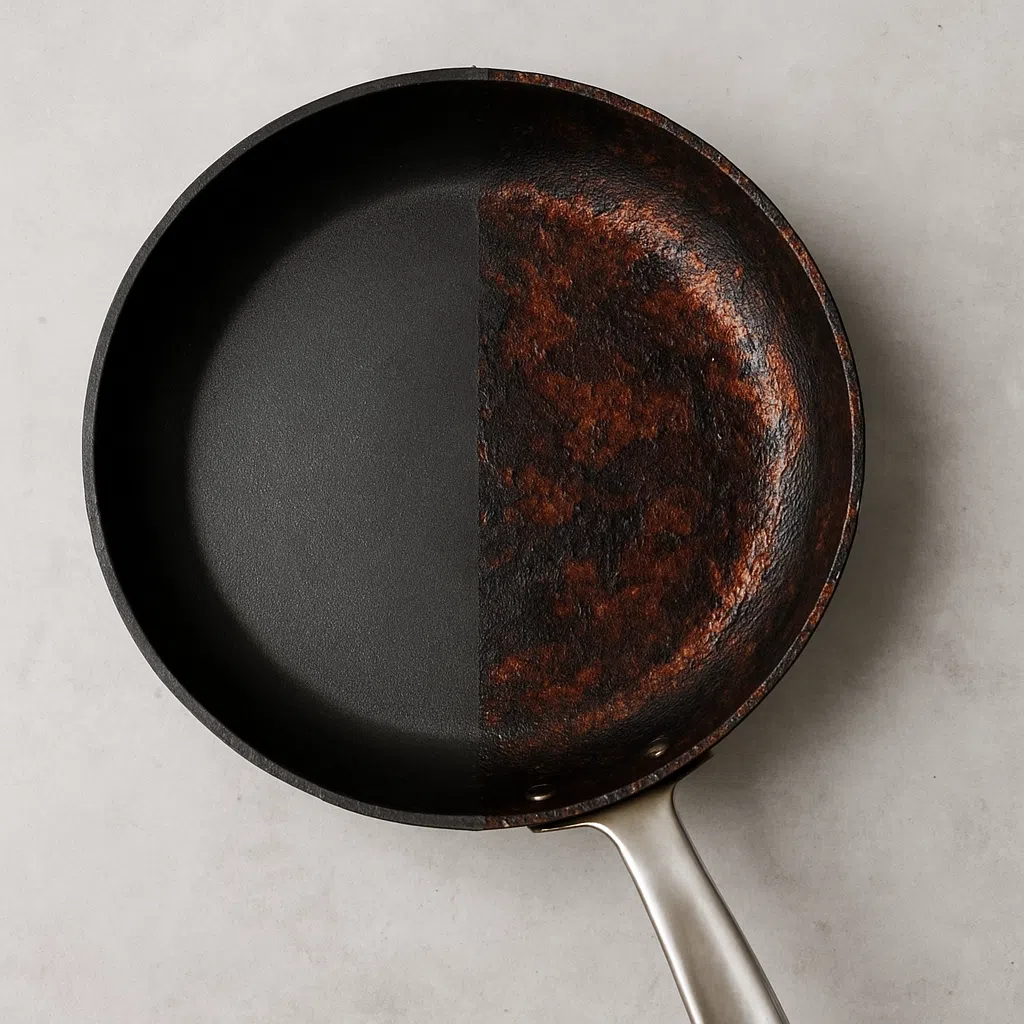
How to Clean a Burnt Stainless Steel Pan
Stainless steel pans tolerate heat and mild acids well. This makes them ideal for soda and vinegar methods and deeper cleaning.
Effective Method
-
Add enough water to the pan to fully cover the burnt area
-
Add white vinegar at roughly 1 part vinegar to 3 parts water
-
Bring the mixture to a gentle simmer, not a rolling boil
-
Simmer for 5–10 minutes, then turn off the heat
-
Add 1–2 tablespoons of baking soda and allow it to fizz
-
Let it sit for a few minutes while the residue loosens
-
Scrape gently using a wooden utensil or nylon brush
-
Rinse with clean water and wash the pan as normal
Why this works
-
Heat softens burnt-on food
-
Vinegar breaks down carbonised residue
-
Baking soda provides mild abrasion without harming stainless steel
This works especially well on a burnt stainless steel pan where food particles have carbonised.
For Heavy Burn Marks
If the first clean lifts some residue but leaves dark, burnt-on staining, repeat the process rather than applying more pressure. Increasing pressure is more likely to scratch the surface than remove the stain.
For tougher marks, a mild powdered cleaner designed for stainless steel cookware can be used sparingly. These products rely on fine abrasives and gentle acids to break down burnt residue without damaging the steel when used correctly. Always apply with a damp sponge, work in small sections, and avoid aggressive scrubbing.
Rinse thoroughly with clean water and wash the pan to remove any remaining residue from the cleaner.
Used patiently, this remains one of the most reliable ways to clean burnt pans made from stainless steel or steel pan material, restoring the surface without compromising its durability.
How to Clean a Burnt Cast Iron Pan
Cast iron needs a controlled approach. The seasoning layer protects the surface, prevents rust, and helps food release during cooking. The aim is to loosen burnt residue without stripping that seasoning.
Safe Method
-
Add a small amount of water to the pan, just enough to cover the burnt-on area
-
Bring the water to a gentle boil for a few minutes to soften burnt food
-
Carefully pour out the hot water
-
Sprinkle table salt into the pan to act as a mild abrasive
-
Scrub gently using a cloth or soft brush
-
Rinse quickly under warm water, avoiding soaking
-
Dry immediately using heat on the hob
-
Apply a thin layer of oil to protect the surface
Why this works
-
Boiling water loosens burnt food without chemicals
-
Salt lifts residue without damaging seasoning
-
Immediate drying prevents rust
Used correctly, this method helps remove burnt residue while preserving the pan’s protective seasoning and cooking performance.
What Not to Do
-
Dishwasher use
-
Long soaking
-
Vinegar and water soaking
-
Detergent
Cast iron reacts badly to moisture left behind, so always dry fully after you clean away residue.
How to Clean a Burnt Enamel Pan
Enamel cookware looks tough but chips easily, especially when scrubbed.
Gentle Method
-
Fill with warm water and washing-up liquid
-
Let it sit for 45 minutes
-
Simmer gently if needed
-
Use a bicarbonate of soda and water mixture
-
Clean with a sponge only
A pan with lemons can also help. Adding lemon slices to water and gently heating helps lift stains naturally.
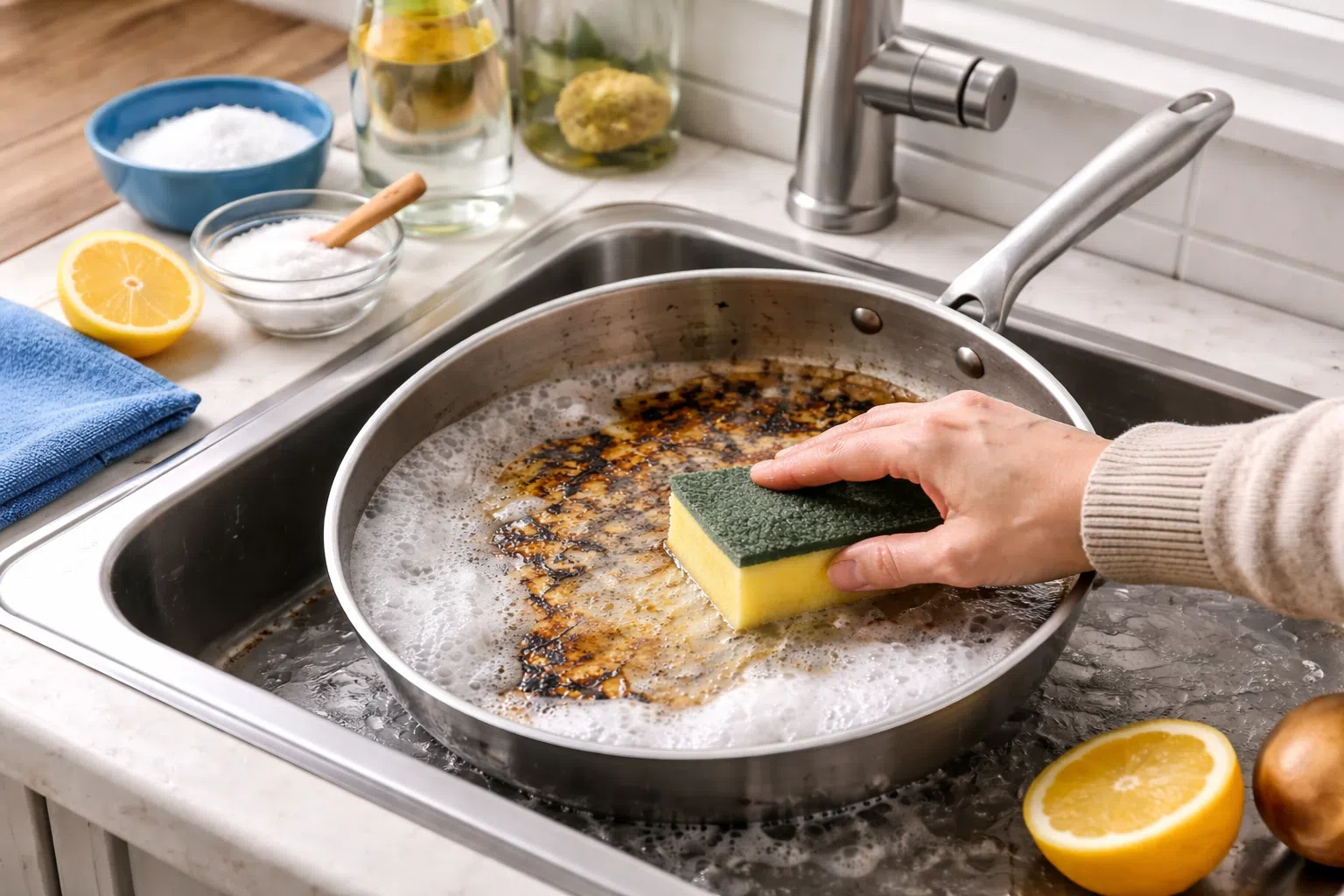
Alternative Methods People Ask About
Using a Dishwasher Tablet
Using a dishwasher tablet can work on stainless steel pans only. Place the tablet in the pan, add hot water, and let it sit until the burnt residue softens. Scrub lightly using a non-abrasive sponge, then rinse thoroughly and wash the pan.
Avoid using a dishwasher tablet on non-stick cookware, cast iron, enamel, or aluminium, as the cleaners are too aggressive and can damage coatings or finishes.
Dryer Sheet Method
A dryer sheet soaked in warm water can soften burnt residue on some pans. It should never be used on non-stick or new pan surfaces.
Baking Soda and Vinegar
Baking soda and vinegar works best on stainless steel pans. The reaction helps loosen burnt food and oil, but it is not suitable for cast iron or delicate coatings, as the acidity can damage seasoning and protective surfaces.
What Causes a Pan to Burn
Most burnt pans come from:
-
Burning food at high heat
-
Butter in the pan overheating
-
Leaving an empty frying pan on heat
-
Food sticking during rushed cooking
Understanding why food sticks helps prevent future damage.
Common Mistakes That Damage Cookware
-
Scrubbing before soaking
-
Using different methods on every pan without checking material
-
Putting a scorched pan straight into cold water
-
Deep cleaning when gentle methods would work
These mistakes shorten the life of cookware far faster than the burn itself.
Frequently Asked Questions
What Is the Best Way to Clean a Burnt Pan?
The best way to clean a burnt pan depends on the pan material. Stainless steel tolerates vinegar and baking soda, while non-stick pans should be cleaned using gentle soaking and non-abrasive methods only.
Can Baking Soda Damage a Pan?
Baking soda can scratch if used dry. Always make a paste and avoid hard scrubbing.
Can Vinegar Be Used on All Pans?
White vinegar is safe for stainless steel pans. It should not be used on cast iron or non-stick cookware.
When Should You Replace a Pan?
If the coating peels, warps, or flakes, replacing the pan is safer than continued use.
Final Safety Note
Always follow manufacturer care guidance when cleaning your pots and pans. Test any method on a small area first, avoid harsh products, and never force burnt residue off a pan. If you have tried to clean your burnt cookware and the surface is damaged, replacement is the safest option.
If you have found this article useful, why not take a look at our article on how to clean a burnt iron, or how to clean a ceramic hob.
If you don't have enough time for your cleaning, or you are unable to clean your own home, why not take a look at our local cleaning service and see if we can help.
You will find more step-by-step guidance in our collection of kitchen cleaning guides.