
Quick Answer: How to clean cloudy glasses
If you want to know how to clean cloudy glasses, the first step is working out what caused the cloudiness. In most homes it is simply mineral build-up from hard water. Sometimes, though, the glass has been permanently etched by repeated dishwasher cycles. The difference matters, because one can be cleaned away and the other cannot. A quick vinegar test will tell you which you are dealing with.

Why Do Glasses Turn Cloudy?
Cloudy drinking glasses usually come down to one of three things.
Hard water leaves behind minerals such as calcium and magnesium. Over time they form a dull, chalky film. You might notice it more if you live in a hard water area or use the dishwasher frequently.
Detergent residue can also leave a hazy layer, particularly if too much product is used or the rinse cycle is weak.
Then there is etching. This happens when high heat and strong detergents slowly wear away the surface of the glass. Instead of a removable film, the surface itself becomes rough and permanently dull.
Most people assume all cloudiness is staining. It is not.
How to Tell If It Is Hard Water or Etching
There is a simple way to check.
Soak a cloth or kitchen paper in white vinegar and press it against the cloudy area for five minutes. If the glass clears underneath, the problem is mineral build-up. If nothing changes, the surface is likely etched.
This small test saves a lot of unnecessary scrubbing.
How to Clean Cloudy Glasses Caused by Hard Water
If the vinegar test improves the appearance, you are dealing with mineral residue. That is the easier fix.
Fill a bowl with equal parts warm water and white vinegar. Submerge the glasses for 15 to 30 minutes. You will often see the cloudy film begin to loosen on its own.
After soaking, wipe gently with a soft cloth. For stubborn areas, make a light paste of baking soda and water and rub carefully in circular motions. Rinse thoroughly and dry with a lint-free towel.
In most cases, the shine returns immediately. Glass that looked ready for the bin can look almost new again.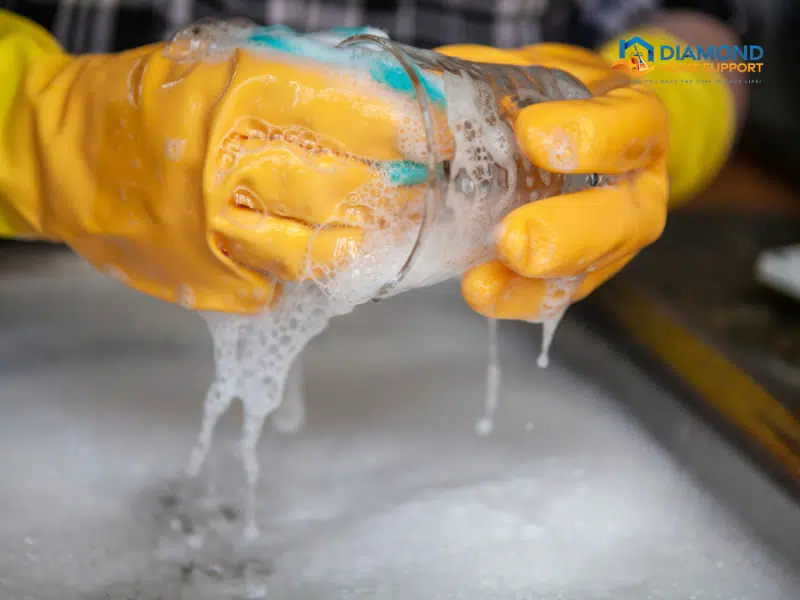
Can Baking Soda Help Remove Cloudiness?
Baking soda works well as a mild abrasive. It can help lift mineral deposits that vinegar has loosened. Use only light pressure, especially on thinner glassware.
If the glass feels gritty rather than smooth, that usually suggests residue rather than etching. In that situation, baking soda can make a noticeable difference.
What If the Glass Is Etched?
If vinegar makes no difference, the cloudiness is probably permanent etching. This is surface damage rather than a removable film.
Etched glass often feels slightly rough to the touch and looks dull rather than chalky. Polishing pastes may reduce the appearance slightly, but they will not restore full clarity.
When glasses are heavily etched, replacement is usually the only way to regain their original shine.
Why Are My Glasses Cloudy After the Dishwasher?
Dishwashers are often the cause.
High temperatures combined with strong detergent slowly wear down glass. Using too much detergent can accelerate the problem. In hard water areas, insufficient rinse aid allows minerals to settle back onto the surface.
If cloudiness appeared gradually over time and does not respond to vinegar, repeated dishwasher cycles are likely responsible.
How to Prevent Glasses Going Cloudy Again
Once you have managed to clean cloudy glasses, prevention is straightforward.
- Reduce dishwasher temperature where possible.
- Avoid overloading with detergent.
- Use rinse aid if recommended for your water type.
- Hand wash delicate or expensive glassware.
- Dry glasses promptly rather than allowing water to evaporate on them.
Small adjustments make a difference over months and years.

Is Cloudy Glass Safe to Use?
Cloudy glass caused by mineral deposits is harmless. It is mostly a cosmetic issue.
Etched glass is also safe to drink from, though the surface is microscopically rough. The main drawback is appearance, not safety.
When Should You Replace Cloudy Glassware?
If the glass remains dull after vinegar treatment and feels rough, it is likely etched beyond recovery. At that point, replacing it may be more practical than repeated cleaning attempts.
For everyday glasses with mild cloudiness, a simple soak often restores clarity in under half an hour.
Always test cleaning methods on one item first and avoid harsh abrasives that could scratch the surface. If in doubt, follow the manufacturer’s care guidance for your glassware.
We cover more ways to tackle grease and residue in our complete kitchen cleaning guide.