
Introduction
A straightforward guide to cleaning artificial grass
Artificial grass is often sold as a low-maintenance option, and to be fair, it is. But it’s not something you can completely ignore and expect to look good forever. Leaves still fall on it, pets still use it, and dirt still gets walked in.
If you give it a bit of attention every now and then, artificial grass will stay clean, tidy and usable for years. This guide explains how to clean artificial grass properly, without overcomplicating things or using products that do more harm than good.
The aim isn’t perfection. It’s keeping your lawn looking decent, smelling fresh, and avoiding the build-up that causes longer-term problems.
Understanding artificial grass and synthetic turf
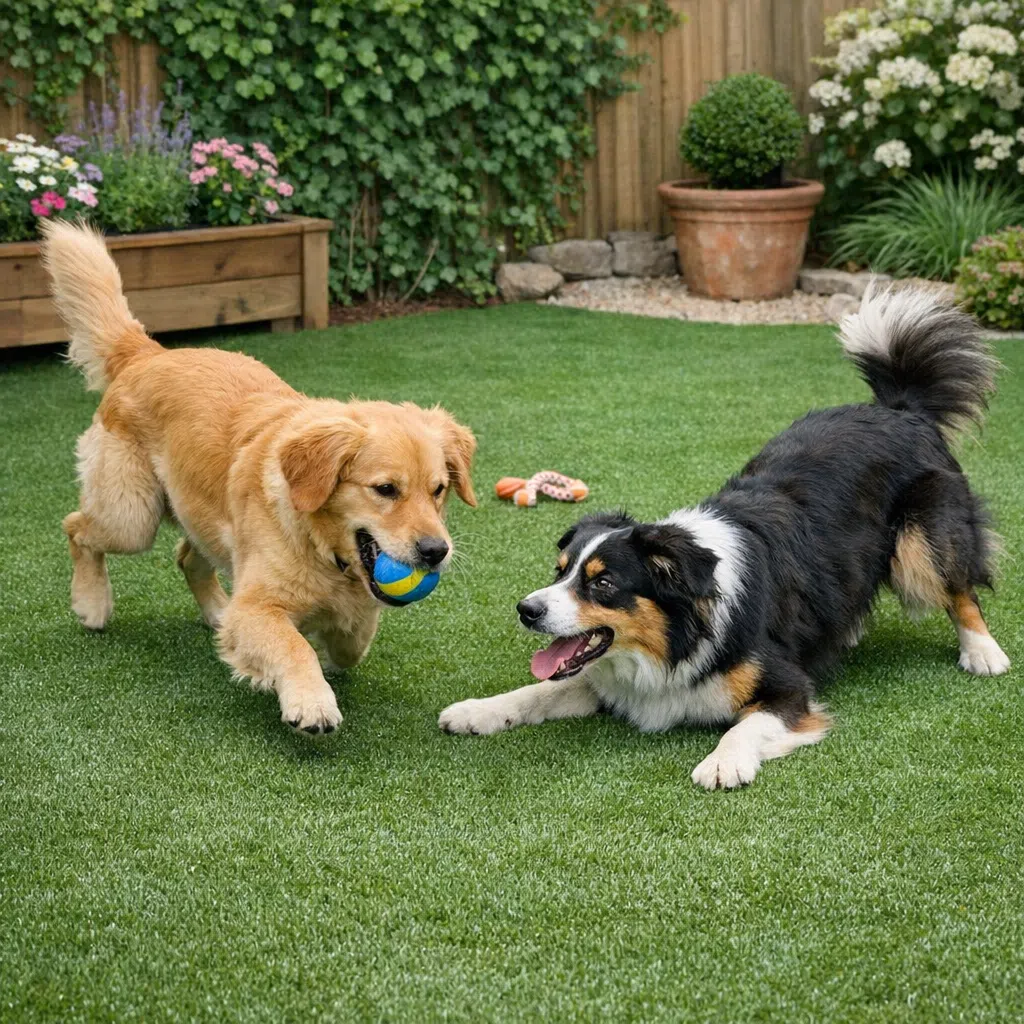
Most artificial lawns are made from plastic fibres attached to a backing layer, with infill added to help the blades stand upright. Modern synthetic turf is designed to look and feel like real grass, and it copes well with everyday use.
That said, artificial grass doesn’t magically stay clean. It still collects leaves, dust, pollen and the occasional mess, especially in busy gardens or homes with pets. Unlike real grass, you can’t rely on growth or rainfall to disguise these things.
Regular cleaning keeps it looking good and helps prevent issues such as weed growth around the edges or unpleasant odours developing over time.
Different types of artificial grass
Some artificial grass is soft and springy, some is shorter and denser. Family gardens often have longer fibres, while putting greens and decorative areas tend to be tighter and firmer.
The cleaning approach is broadly the same for all types, but softer lawns usually need brushing a little more often to stop the fibres flattening.
Brushing, raking and basic upkeep
Most day-to-day cleaning doesn’t involve chemicals at all. It’s about removing what shouldn’t be there and keeping the fibres upright.
Removing leaves and debris
Leaves are the most common issue. If they’re left to sit, they break down and create the perfect conditions for moss growth.
A leaf blower is the quickest option, but a plastic rake works just as well. Avoid metal tools, as they can snag the fibres. Try to remove leaves before they become damp and compacted. It’s much easier that way.
Brushing the fibres
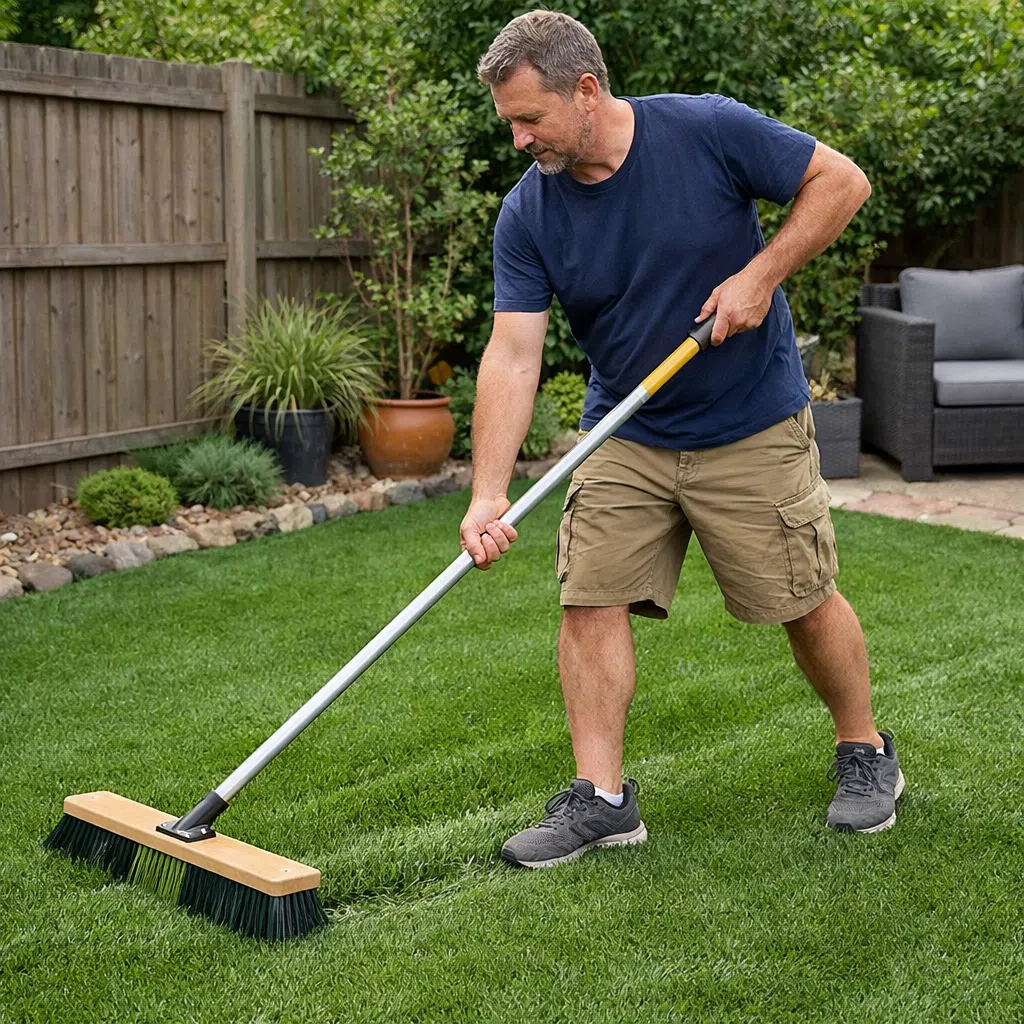
Brushing makes a noticeable difference to how artificial grass looks. A stiff brush or broom lifts flattened fibres, removes surface dirt and helps redistribute the infill.
Brush against the direction of the grass rather than with it. High-traffic areas usually need more attention than the rest of the lawn.
Brushing also helps after heavy rain, and it’s useful in winter for clearing light snow and ice. If the weather is particularly bad, it’s better to leave ice to melt naturally than scrape at it aggressively.
Using an artificial grass cleaner
Although artificial grass is marketed as low-maintenance, it does need proper cleaning occasionally. This is especially true if you have pets or use the garden a lot.
An artificial grass cleaner is designed to clean the turf without damaging the fibres or backing. Avoid household cleaners that contain bleach or harsh chemicals, as these can do more harm than good.
Pet-friendly artificial grass cleaner
If you have dogs, a pet-friendly artificial grass cleaner is worth using. These products are designed to break down urine and organic waste, rather than just masking smells.
They’re safe to use around pets once dry and help prevent lingering odours, particularly in areas where dogs tend to go regularly.
Simple cleaning solutions
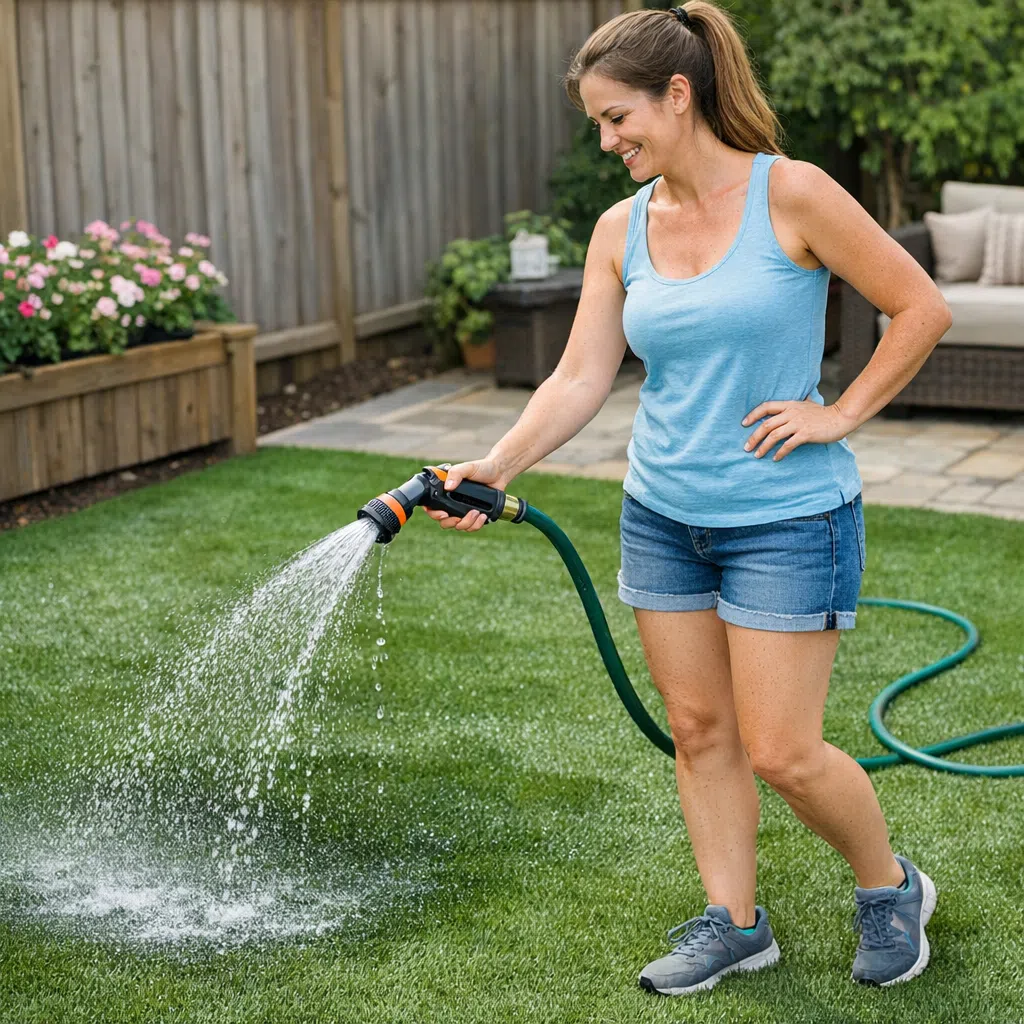
For general cleaning, warm water with a small amount of washing-up liquid is usually enough. Apply it with a watering can or garden sprayer, then rinse the area thoroughly with a hose.
If smells persist, a mixture of water and white vinegar can help neutralise odours. Baking soda is another option for deodorising problem spots before rinsing.
Always rinse the entire area after using any cleaning solution. Leaving residue behind can attract dirt.
Dealing with stains and spills
Artificial turf is durable, but spills should still be dealt with sooner rather than later.
Food and drink spills are best blotted with a cloth or sponge first, then cleaned gently. Avoid scrubbing hard, as this can damage the grass fibres.
Grease or oil can be absorbed with a powder before brushing it away. Chewing gum is easier to remove if you freeze it with ice cubes and lift it carefully.
The key is not to leave stains sitting for days. Regular cleaning prevents stubborn stains from setting in.
Cleaning artificial grass with dogs
Artificial grass is popular with pet owners for a reason. It copes well with dogs, but only if pet waste is dealt with properly.
Solid waste should always be picked up promptly. After that, rinse the area with a hose. This alone prevents most problems.
Dog urine can cause unpleasant odours if it’s allowed to build up. Rinsing regularly helps, but enzyme-based or pet-friendly cleaners are more effective for long-term control.
ome owners find it helpful to train dogs to use one area of the lawn as a toilet area. It makes cleaning quicker and keeps the rest of the grass smelling fresh.
Weeds and moss around artificial grass
Weeds are far less common than with natural lawns, but they can still appear around the edges or through joins.
Small weeds are best removed by hand. If you use a weed killer, make sure it’s suitable for use near artificial grass and avoid spraying directly onto the turf.
oss growth is usually linked to poor drainage or a build-up of debris. Clearing leaves and keeping infill loose helps prevent it.
Snow, ice and cold weather
Artificial grass handles winter better than natural grass, but it still needs care.
Snow should be removed with a plastic shovel or rake. Ice can be gently brushed away once it loosens. Avoid salt or chemical de-icers, as these can damage the turf.
If ice is thin, it’s often best to leave it to melt naturally.
Common mistakes to avoid
A few things cause unnecessary damage to artificial grass:
-
Using bleach or harsh chemicals
-
Using a jet washer on full power
-
Leaving pet waste for too long
-
Allowing debris to build up
-
Pulling at loose fibres
Avoiding these issues will help keep your lawn looking good for longer.
Keeping artificial grass looking good long-term
Maintaining artificial grass doesn’t need to be complicated. A simple routine works best:
Clear leaves regularly.
Brush the fibres when they start to flatten.
Rinse the lawn after heavy use.
Use a suitable cleaner when needed.
That’s usually enough to keep your artificial lawn clean, tidy and usable all year round.
Final thoughts
Artificial grass is designed to make life easier, not harder. With a bit of regular cleaning and the right approach, it stays looking good without much effort.
Deal with mess as it happens, avoid harsh products, and don’t overthink it. Done properly, artificial grass remains a clean, practical and low-maintenance option for families and pet owners alike.
Read some more outside cleaning tips from our Blog:
Preparing Your Patio Furniture For The Summer
Tips For Organising and Decluttering Your Garage
5 Tips For Cleaning Your Outdoor Furniture
How To Clean Your Barbecue Grills With An Onion
How To Clean Oil Off A Driveway
Find out about professional cleaning services in your area and get the time back in your life!